Short Description:
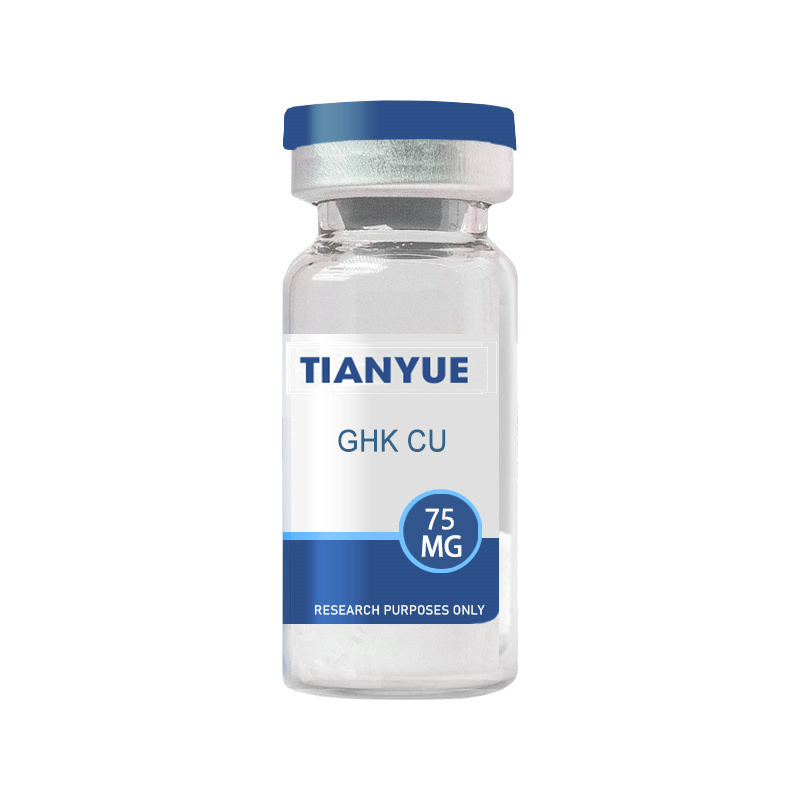
GHK-Cu, also known as copper peptide GHK-Cu, is a naturally occurring copper complex of the tripeptide glycyl-L-histidyl-L-lysine. It was first isolated from human plasma and has since been found in other areas of the body, such as saliva and urine. Copper peptides are naturally occurring protein fragments that have a strong attraction to copper ions and are thought to play a vital role in the normal functioning of the body. GHK-Cu has been the subject of numerous studies, which have revealed several roles and benefits in the human body.
GHK-Cu, also known as copper peptide GHK-Cu, is a naturally occurring copper complex of the tripeptide glycyl-L-histidyl-L-lysine. It was first isolated from human plasma and has since been found in other areas of the body, such as saliva and urine. Copper peptides are naturally occurring protein fragments that have a strong attraction to copper ions and are thought to play a vital role in the normal functioning of the body. GHK-Cu has been the subject of numerous studies, which have revealed several roles and benefits in the human body.
GHK-Cu has been shown to improve the healing of ischemic open wounds in rats, leading to faster healing. It stimulates the synthesis of collagen, elastin, and glycosaminoglycans in the skin, which are essential for wound healing. In the same study, wounds treated with GHK-Cu showed a decreased concentration of metalloproteinases 2 and 9, which are enzymes involved in the breakdown of extracellular matrix during the wound healing process.
GHK-Cu stimulates collagen and decorin production, which are essential for tissue regeneration and wound healing. It also increases cellular stemness and secretion of trophic factors by mesenchymal stem cells. GHK-Cu also promotes skin remodeling, which is crucial for wound healing and regeneration.
GHK-Cu (glycyl-l-histidyl-l-lysine copper) has been shown to have antioxidant and anti-inflammatory effects in various studies. GHK-Cu may prevent oxidative stress in the skin by regulating copper levels and influencing the activity of various antioxidant genes.
GHK-Cu has also been shown to ameliorate lipopolysaccharide-induced acute lung injury in mice by suppressing inflammation and reducing oxidative damage .
GHK-Cu has been shown to improve the appearance of aging skin in clinical studies. Both GHK and GHK-Cu have been found to have anti-inflammatory and tissue remodeling properties [R].
GHK-Cu at a 1nM concentration enhances the expression of basic fibroblast growth factor (bFGF) and vascular endothelial growth factor (VEGF) in human dermal fibroblasts exposed to radiation. These factors promote the formation of blood vessels and improve blood flow to injured tissues. The ability of GHK and its Cu chelate to promote skin remodeling, wound healing, and regeneration, and its prominent antioxidant and anti-inflammatory effects are qualities that help with healthy aging.
Copper plays a crucial role in stimulating the growth of blood vessels and acts as a necessary co-factor in the signaling processes involved in angiogenesis. The combination of GHK-Cu with copper (II) has been found to dramatically increase cell proliferation, differentiation, and production in a synthetic cryogel extracellular matrix (ECM) model.
GHK-Cu has been found to increase hair growth and thickness, as well as enlarge hair follicle size. GHK-Cu stimulates collagen synthesis by fibroblasts, which is necessary for hair growth and thickness .
GHK-Cu promotes the growth of human hair follicles by stimulating the proliferation and precluding the apoptosis of dermal papilla cells (DPCs). GHK-Cu has strong inhibitory effects on dihydrotestosterone (DHT), which is a key factor in hair loss regulation .